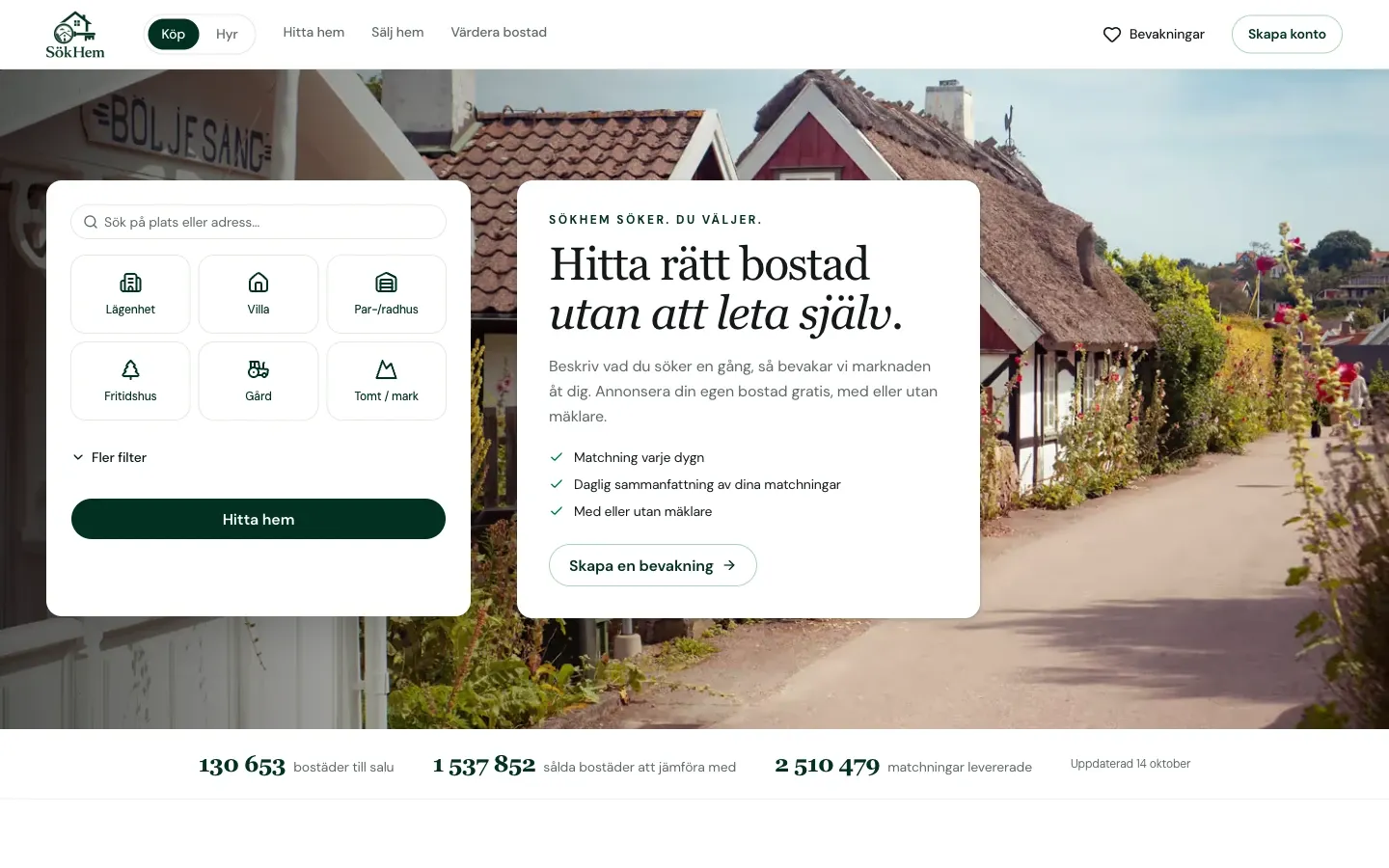
SökHem
Buyers describe what they want once, draw their areas on a map and get matched every day when the right home is listed. Sellers list for free, with or without an agent.
- 130,000+
- homes for sale
- 2.5 M
- matches delivered
- 750+
- area guides
Workflows that run themselves. A lot of work is reading something, understanding it and passing it on: an invoice to the finance system, an order to the warehouse, a form to the right person. With AI automation, your systems take over that work in between, even when the input is unstructured, like emails, PDFs and images.
Book an intro callWhat these flows share is that the rules can be described, but the input does not always look the same. That is where AI makes the difference over ordinary automation.
Not everything needs AI. When the data is already structured, an ordinary integration is often enough, and it is cheaper and more predictable. I use AI where the input is text, images or exceptions a rule cannot catch, and plain code for the rest.
So an automation is often a chain: code that fetches and checks, a language model that interprets, and a person who approves whatever is uncertain.
An automation has to work on an ordinary Tuesday, not just in a demo. Every run is logged, failures alert the right person, and anything the model is unsure about goes to a review queue instead of being guessed.
I build automations in code, with queues and scheduling that survive failures and restarts, so they can be versioned, tested and reviewed like the rest of your software. If a tool such as n8n is already in place, I can build on it.
I can run the automations for you, with monitoring, updates and steady improvements. If you would rather run them yourselves, your team gets the code, the documentation and a walkthrough of how everything fits together.
A typical first engagement automates a single flow, such as incoming invoices or orders by email. It can usually go live within a few weeks, and the assessment shows which flow is worth starting with.
Read more about how I work as an AI consultant in Gothenburg.
Buyers describe what they want once, draw their areas on a map and get matched every day when the right home is listed. Sellers list for free, with or without an agent.
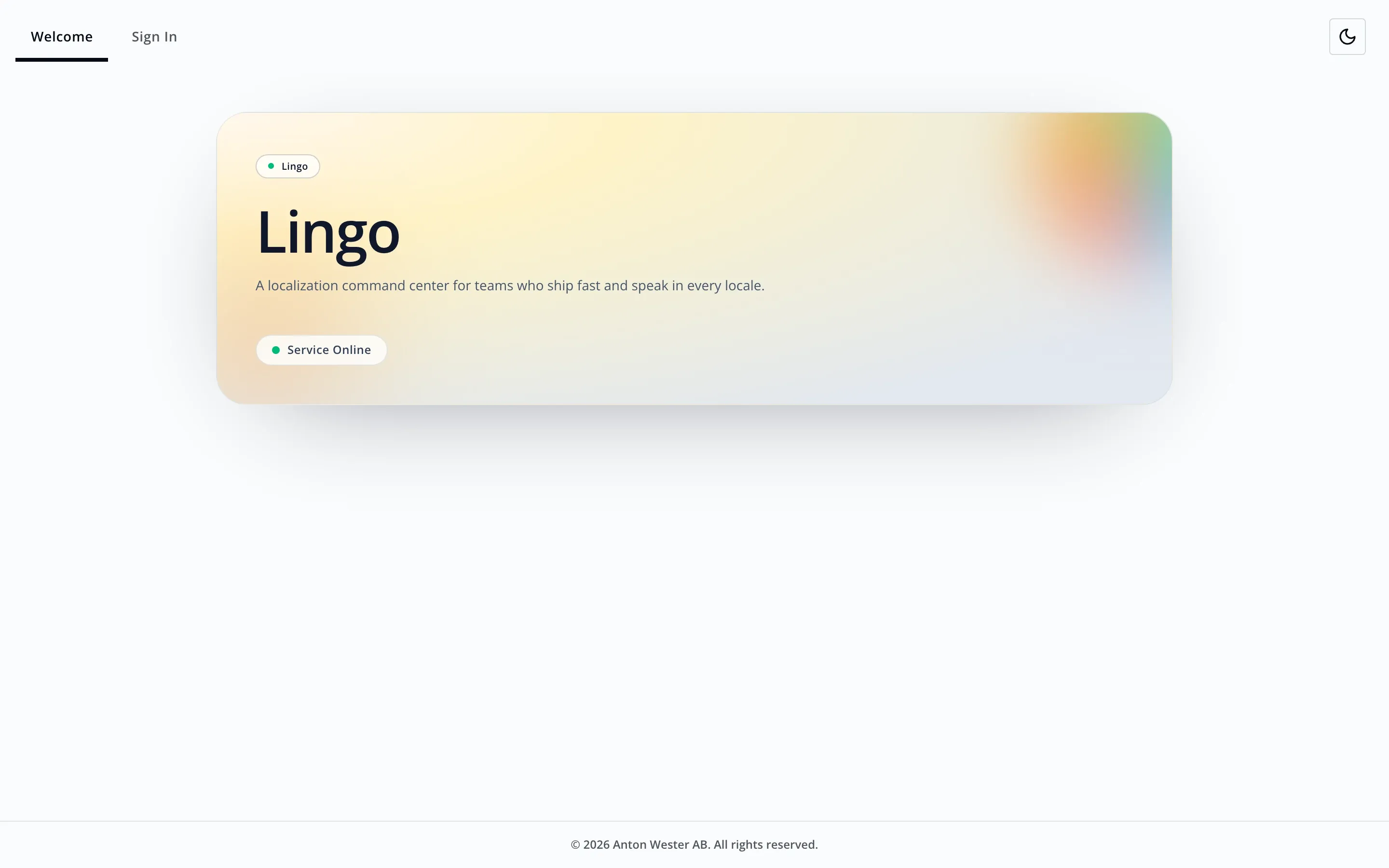
A platform where product, content and engineering teams manage translations, reviews, releases and delivery in one place. AI writes the first version of every translation, and people review and approve.
Automation where a language model interprets input that ordinary rules cannot handle, such as emails, PDFs and free text, while plain code does the rest. The result is flows that cope with real, messy input.
Processes that repeat often, follow roughly the same rules and take a lot of time today. Invoices, orders and recurring reports usually rank high. The assessment gives you a prioritised list.
Then it does not guess. Uncertain cases go to a queue where a person makes the call, and those cases are used to improve the automation over time.
No. The automation connects to the systems you already have through APIs, and where there is no API we find another way in, for example through exports or inboxes.